
Hiring a locksmith is one of those tasks that most homeowners do not think about until the exact moment they need one. Unlike choosing a builder or an electrician, where there is usually time to research and compare, locksmith decisions often happen quickly, sometimes under real stress.
That does not mean due diligence has to go out the window entirely. A short set of questions, asked before a locksmith ever arrives at your door, can make the difference between a smooth, fairly priced job and a frustrating, costly experience. This checklist covers exactly what to ask and why each question matters.
Start With Licensing and Identification
The very first question worth asking, every time, is whether the locksmith holds a current security provider license. In Queensland, this licensing exists specifically because locksmiths have close access to the physical security of a property, and it involves background checks that offer a genuine layer of accountability. A legitimate locksmith will answer this question directly and without hesitation.
It is also reasonable to ask how you will recognise the person or vehicle that arrives, particularly if you booked over the phone rather than in person. Some businesses send branded vehicles or uniformed staff, others operate more informally, but either way, having some expectation of what to look for helps confirm you are dealing with who you think you are dealing with.
Ask About Pricing Before Any Work Begins
Cost is often the most uncomfortable question to ask, particularly in an emergency situation, but it is also one of the most important. Ask for the callout fee upfront, separate from any labour or parts cost.
Ask whether the quote you are given over the phone is a firm estimate or a rough figure that could change significantly once the locksmith actually assesses the job in person.
If the job involves anything beyond a simple callout, such as rekeying, lock repair, or replacement, ask what the price includes. Does it cover parts as well as labour? Is there a call out fee that applies regardless of whether work ends up being needed, for example if you manage to get back inside before they arrive? A transparent locksmith will answer these questions plainly, and a reluctance to give any concrete numbers before starting work is a signal worth paying attention to.
Clarify the Approach Before They Start
Before any work begins, ask what method the locksmith plans to use and why. For most standard lockouts, non-destructive entry methods such as picking or specialised bypass tools should be attempted first, since these avoid damaging the lock or the door itself.
Ask directly whether drilling or forced entry will be necessary, and if so, why a non-destructive approach is not an option in this particular case.
This question serves two purposes. It gives you a clear expectation of what is about to happen to your door, and it also acts as a natural check against locksmiths who default to the more expensive, more destructive option without good reason. A locksmith confident in their skills will have no issue explaining their reasoning.
Ask What Happens After the Lock Is Opened
It is worth asking, particularly if the lockout was caused by a lost key rather than a mechanical fault, whether rekeying is recommended and why. If a key has genuinely gone missing and there is any chance it could be found by someone else, rekeying the lock is often a sensible next step, since it renders the lost key useless without needing to replace the entire lock.
Ask whether this is included in the callout price or treated as a separate service.
If the lock needs to be replaced entirely, ask about the options available rather than accepting whatever is offered by default. There is often a range of lock types and security grades available, and a good locksmith will explain the differences rather than simply installing whatever they happen to have on hand.
Ask About Guarantees and Follow Up
A straightforward but often overlooked question is whether the work comes with any kind of guarantee or warranty, particularly for repairs or newly installed hardware. If a lock installed today starts behaving oddly in a week, is that covered, or would a second callout fee apply? Knowing the answer before work begins avoids an awkward conversation later if something does not go as expected.
It is also reasonable to ask what to do if you have any issues after the locksmith leaves. A legitimate, established business will have a clear answer, whether that is a direct phone number or a standard process for following up on completed work.
Confirm Payment Methods in Advance
This might seem like a minor detail, but confirming accepted payment methods before the locksmith arrives avoids an inconvenient situation where cash is demanded on the spot with no alternative offered. Most established, licensed locksmiths accept card payments and provide a proper receipt or invoice.
A strong preference for cash only, particularly combined with reluctance to provide any documentation of the work or cost, is worth noting.
For Non-Emergency Situations, Ask for a Written Quote
If the situation is not urgent, such as scheduling a lock upgrade or planning ahead for a rekey, always ask for a written quote before committing to a date. This gives you something concrete to refer back to, and it allows for a proper comparison if you are considering more than one locksmith for a larger job, such as installing new locks across an entire property.
Questions Specific to Smart Lock or Security Upgrades
If the job involves anything beyond a standard mechanical lock, such as a smart lock installation or a broader security upgrade, a few additional questions are worth asking. Ask whether the locksmith has specific experience installing the type of smart lock you are considering, since not every locksmith works regularly with electronic or connected systems. Ask about ongoing support if the device requires app setup, firmware updates, or troubleshooting down the line, and whether that support is included or charged separately.
Why Asking Feels Uncomfortable, But Is Worth It
There is a natural hesitation to ask a lot of questions when you are stressed, cold, or simply want the problem solved as quickly as possible. It can feel like slowing things down unnecessarily.
In practice, most of these questions take only a minute or two to ask and answer, and a professional locksmith will not be bothered by them at all. If anything, a locksmith who answers clearly and patiently is demonstrating exactly the kind of transparency worth paying for.
Questions Worth Asking for Commercial or Body Corporate Properties
If you are arranging locksmith work on behalf of a business, office, or a body corporate managed building, a slightly different set of questions becomes relevant. Ask whether the locksmith has experience with master key systems, since commercial properties often require a layered access structure where some keys open individual offices or units while others provide broader access across common areas.
Not every locksmith works regularly with these more complex systems, so confirming experience upfront avoids delays or a job that needs to be redone by someone more familiar with the setup.
It is also worth asking about record keeping. For a body corporate or commercial property, knowing exactly how many keys exist, who they were issued to, and being able to update that record when tenants or staff change, is an important part of maintaining security over the long term.
A locksmith experienced in this area should be able to advise on setting up a practical system for tracking this, rather than leaving it as an informal, easily lost piece of institutional knowledge.
A Quick Reference Summary
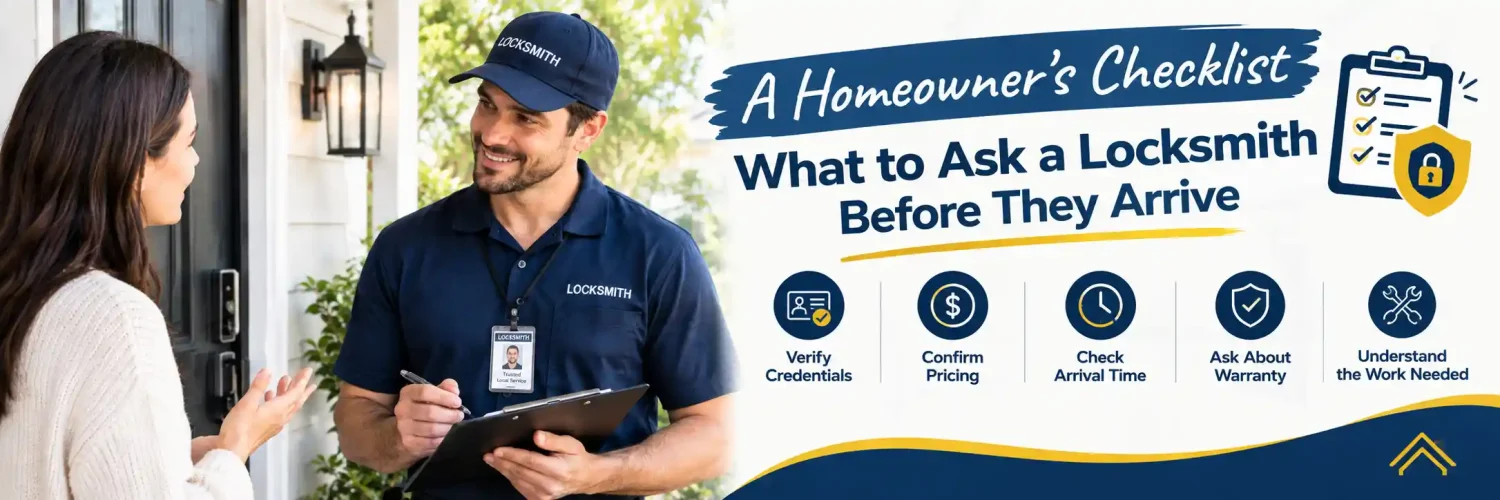
Taken together, the core questions worth asking before any locksmith begins work are relatively short and easy to remember once you have gone through them a few times. Confirm licensing and how to recognise the person arriving.
Ask for a clear breakdown of pricing before work starts. Clarify the planned approach, including whether non-destructive methods will be attempted first.
Ask what happens after the immediate problem is solved, particularly around rekeying or replacement. Confirm whether any guarantee applies to the work.
Check accepted payment methods, and for non-urgent jobs, always request a written quote.
None of these questions require any specialised knowledge to ask, and a professional locksmith will not find any of them unreasonable. If anything, working through this list tends to reveal quite quickly whether you are dealing with an established, transparent operator or someone worth reconsidering before they even start the job.
Conclusion
The most practical way to use this list is to save it somewhere accessible before you actually need it, whether that is a note on your phone or printed and kept somewhere at home. Locksmith emergencies rarely arrive with much warning, and having a ready reference means you can ask the right questions calmly rather than trying to remember them in the moment.
A small amount of preparation here goes a long way toward ensuring the person working on your locks is someone you can genuinely trust with that responsibility.