
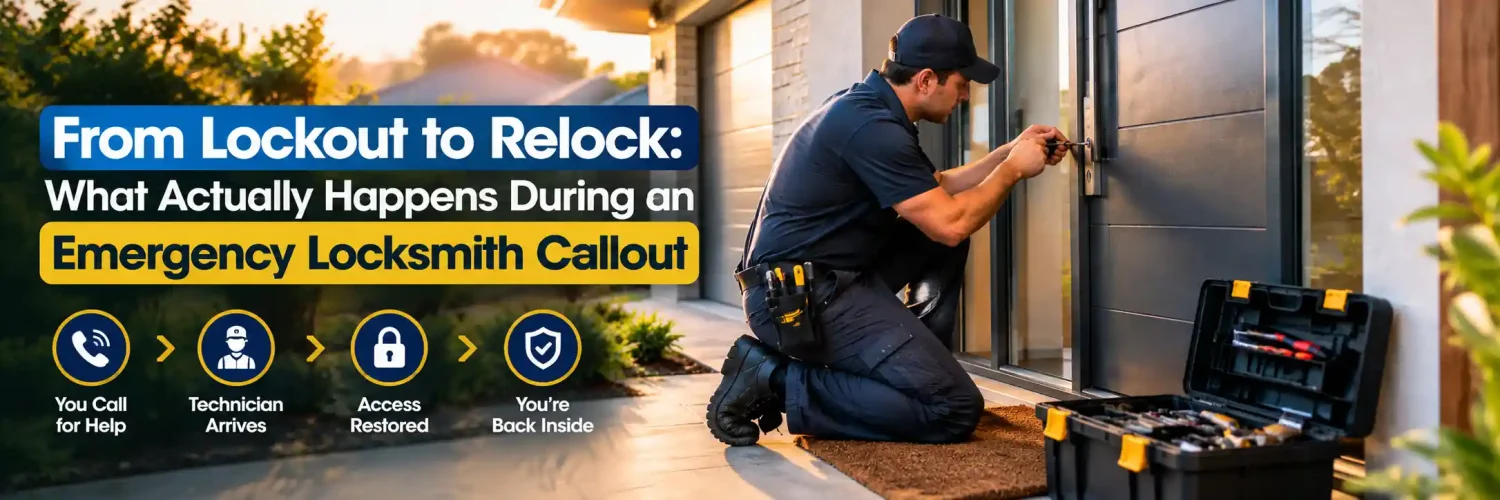
There is a particular kind of panic that comes with standing outside your own front door, patting down your pockets for the third time, knowing full well the keys are sitting on the kitchen counter exactly where you left them. It happens to almost everyone eventually, whether it is a house in Coorparoo, a unit near the train line, or a car parked outside the shops.
What separates a stressful ten minutes from a stressful two hours is understanding what actually happens once you make that call. This guide walks through the real, practical steps of an emergency locksmith callout, from the first phone call to the moment your door clicks shut and locks properly again.
What Gets Asked and Why The First Call
When you call an emergency locksmith, the first few minutes are less about fixing the problem and more about understanding it. A good locksmith will ask a handful of quick questions before anyone even gets in a van.
They will want to know your location, because response times vary depending on how far the nearest available technician is. They will ask what type of lock you are dealing with, whether it is a standard deadbolt, a mortise lock, an electronic keypad, or something older and less common, because the tools and approach differ significantly between them.
They will also ask how the lockout happened. Did the key snap off inside the lock? Is the key simply missing? Has the lock mechanism jammed or seized up on its own? Each of these scenarios points toward a different solution, and asking upfront saves time once the locksmith arrives, because they can bring the right tools rather than guessing.
Finally, expect a question about proof of residency or ownership. This might feel like an inconvenience when you are standing in the cold wanting to get inside, but it is a basic and important safeguard.
A locksmith who does not ask this question at all is one worth being cautious about, because it suggests they are not concerned with confirming they are helping the right person.
What Is Realistic Response Time
Genuine emergency response in a suburb like Coorparoo typically falls somewhere between twenty and thirty minutes, assuming the locksmith is operating locally rather than dispatching from across the city. Traffic, time of day, and how many other emergency calls are being handled at once all affect this.
If a company promises an unrealistically fast arrival time, particularly late at night, it is worth taking that promise with a grain of salt. A locksmith who is honest about a slightly longer wait during a busy period is generally more trustworthy than one who overpromises just to secure the booking.
While you wait, there is little you need to do other than stay somewhere safe and visible. If it is dark, waiting under a porch light or near a well lit area is sensible. If you are locked out of a car, staying with the vehicle rather than wandering off makes the handover quicker once the locksmith arrives.
Arrival and Assessment
When the locksmith arrives, the first thing they will typically do is a visual and physical assessment of the lock itself, rather than immediately reaching for tools. This step matters more than people realise. A rushed assessment can lead to unnecessary damage, while a proper one usually means the door can be opened without harming the lock or the frame at all.
For a standard pin tumbler lock, many lockouts can be resolved through non-destructive methods such as picking or using specialised bypass tools. This is often faster and always gentler on your property than forcing entry. For more complex locks, such as high security cylinders or older mortise locks, the process might take a little longer, but the same principle applies: damage is always the last resort, not the first option.
Occasionally, a lock is too damaged or too old for non-destructive entry to be realistic. In these cases, a locksmith should explain clearly why drilling or forced entry is necessary before proceeding, rather than jumping straight to it. This is also the point where cost should be discussed plainly, so there are no surprises once the work begins.
The Actual Unlocking Process
Non-destructive entry methods look far less dramatic than what is often shown in films. Picking a lock is usually a quiet, methodical process involving small tools that manipulate the pins inside the cylinder one at a time. For many residential locks, this can take anywhere from a few minutes to fifteen or twenty minutes, depending on the lock’s condition and complexity.
For doors with multiple locking points or additional security features, the locksmith may need to use a combination of techniques. Snapped keys are handled differently again. If a key has broken off inside the cylinder, extraction tools are used to carefully remove the broken piece without damaging the internal pins, after which the original key, if a spare exists, or a newly cut key can be used.
If entry does require drilling, the locksmith should target the lock itself rather than the surrounding door or frame, and the goal is always to leave the door structurally sound. A drilled lock will usually need to be replaced afterward, since the drilling process compromises its internal mechanism, but the door itself should be undamaged.
What Happens After the Door Opens
Getting the door open is only part of the job. A responsible locksmith does not simply open the lock and leave. The next step is making sure the lock is left in a secure, functioning state, not just unlocked but genuinely safe to rely on again.
If the original lock was opened without damage, the locksmith will typically test it a few times to confirm it locks and unlocks smoothly before packing up. If a key was lost rather than broken, this is often a good moment to discuss whether rekeying makes sense, particularly if there is any chance the lost key could end up in the wrong hands. Rekeying changes the internal pin configuration so that old keys no longer work, without needing to replace the entire lock hardware.
If the lock was damaged during entry or was already showing signs of wear before the lockout occurred, this is the point where replacement becomes the sensible option. A worn lock that finally failed is unlikely to hold up reliably going forward, and patching it back together is often a short term fix rather than a real solution.
Relocking and Final Checks
Before the job is considered finished, a thorough locksmith will run through a short set of final checks. This includes testing the door from both sides, confirming the deadbolt or latch engages fully, and checking that the strike plate on the frame lines up correctly with the bolt.
A lock that turns freely but does not actually seat into the frame properly can give a false sense of security, so this step should never be skipped.
If new keys have been cut or a lock has been replaced, you should walk away with a clear understanding of how many keys exist and who has access to them. This is particularly relevant for shared households, rental properties, or units where previous occupants may have had keys cut over the years.
Understanding the Cost Conversation
Emergency callouts naturally carry a premium compared to scheduled work, largely due to the immediate availability required and, for after hours calls, the disruption to normal working hours.
A trustworthy locksmith will explain the pricing structure before starting, covering the callout fee, any labour involved, and the cost of parts such as replacement locks or cut keys. Vague answers or reluctance to give any indication of cost before work begins are signs worth noting for future reference, even if the job goes ahead.
Car Lockouts: A Slightly Different Process
Vehicle lockouts follow a similar overall structure but involve a different set of tools and considerations. Modern cars often use electronic key fobs alongside a physical key, and central locking systems mean the actual point of entry is rarely as simple as a single mechanical lock.
A locksmith attending a car lockout will typically assess the make and model first, since access points and vulnerable areas vary significantly between manufacturers and even between model years from the same brand.
Non-destructive entry for vehicles usually involves specialised inflatable wedges and long reach tools designed to access the interior locking mechanism or unlock button without scratching paint or damaging weather seals. This is a world away from the coat hanger method many people picture, and it reflects just how much vehicle security technology has changed over the past decade.
If the issue is a lost or non-functioning key rather than simply being locked out with the key inside, the process shifts toward key cutting and programming, which for many modern vehicles requires specific equipment to communicate with the car’s immobiliser system. This is more involved than traditional key cutting and is not something every locksmith is equipped to handle, so it is worth confirming this capability specifically if you have lost a car key entirely rather than simply locked it inside.
Reducing the Chance of a Repeat Lockout
Once the immediate stress of a lockout has passed, it is worth spending a moment thinking about how to reduce the chance of it happening again. Spare keys are the most obvious solution, but they are only useful if stored somewhere genuinely accessible in an emergency, such as with a trusted neighbour or family member, rather than tucked away somewhere that is itself hard to reach in a hurry.
For households that experience lockouts more frequently than average, whether due to busy schedules, young children, or simply a lock that has become difficult to operate reliably, it may be worth discussing a keyless entry option with a locksmith during a non-emergency visit. This shifts the problem from remembering a physical key to remembering a code or having a smartphone on hand, which for many people turns out to be a more reliable habit.
If a particular lock seems to be the recurring source of trouble, whether through stiffness, difficulty turning, or a key that frequently needs to be wiggled into position, this is often a sign the lock itself is nearing the end of its useful life rather than something to keep working around indefinitely. Addressing a struggling lock proactively is almost always less stressful and often less expensive than waiting for it to fail completely during an actual lockout.
Conclusion
Understanding these steps is not just about satisfying curiosity. It changes how you experience a stressful situation. Knowing that a locksmith is going to ask questions, assess before acting, try non-destructive methods first, and finish with proper checks means you can relax a little once help is on the way, rather than bracing for a rushed or careless job.
A lockout is rarely convenient and never particularly pleasant, but it does not have to be chaotic. With the right approach, what starts as a frustrating moment standing outside a locked door ends with a secure, properly functioning lock and a clear understanding of exactly what was done and why.