
Locksmith work sits in an unusual category of trade. Most of the time, when you hire someone, you have a reasonable amount of time to research, compare, and check credentials before committing.
Locksmith work rarely allows for that luxury. You are locked out, standing in the cold, or dealing with a lock that has failed unexpectedly, and the pressure of the moment makes it tempting to hire whoever answers the phone fastest or shows up first on a search result. Unfortunately, this exact dynamic is what unlicensed and poorly qualified operators rely on.
Knowing how to spot the warning signs, even under pressure, can save you from damaged property, inflated costs, and in some cases, a genuine security risk.
Why Licensing Actually Matters Here
In Queensland, locksmiths are required to hold a security provider license, which involves background checks and a demonstrated level of competency. This is not simply bureaucratic red tape. A locksmith has legitimate, close access to the physical security of your home, your business, or your vehicle.
Licensing exists specifically because this is a trade where trust and accountability genuinely matter, not just as a formality but as a real safeguard.
An unlicensed operator has not been through this vetting process. That does not automatically mean they are dishonest or incompetent, but it does mean there is no formal accountability if something goes wrong, whether that is damage to your property, overcharging, or something more serious.
When you hire a licensed locksmith, you are hiring someone who has something to lose professionally if they behave dishonestly. That accountability structure simply does not exist with unlicensed operators.
Vague or Evasive Answers About Licensing Warning Sign One
This is the most direct test, and it is worth applying it even when you are in a hurry. A legitimate locksmith should be able to state their license number without hesitation when asked.
If the response is vague, deflective, or the person suddenly becomes cagey about a question that should have a simple, immediate answer, that is a significant red flag.
Genuine businesses are generally happy to be asked this, because it reflects well on them. Reluctance or irritation at being asked is itself informative.
No Fixed Business Address or Verifiable Details Warning Sign Two
A locksmith operating without any fixed business address, listed phone number tied to an actual business, or verifiable online presence should raise questions. This does not mean every legitimate locksmith needs a physical storefront, since many operate as mobile services, but there should still be a traceable business identity behind the person showing up at your door.
A quick search of the business name before they arrive, if time allows, can reveal whether there is a consistent, established presence, reviews going back further than a few weeks, and a phone number that matches what is listed publicly. Operators who exist purely through generic directory listings with little other verifiable information are worth being cautious about.
Refusal to Provide an Upfront Quote Warning Sign Three
Pricing in locksmith work can vary depending on the complexity of a job, and that is entirely reasonable. What is not reasonable is a flat refusal to give any indication of cost before work begins. A legitimate locksmith should be able to explain the general pricing structure, including callout fees and typical costs for common jobs, even if the exact final number depends on what they find once they assess the lock.
Be particularly wary of an extremely low advertised price that seems designed purely to get someone through the door, followed by a dramatically higher final bill once the work is supposedly complete. This bait and switch pattern is one of the most common tactics used by dishonest operators, and it relies specifically on the customer being in a stressful, low leverage situation where arguing over price at that moment feels difficult.
Immediately Recommending Full Replacement Warning Sign Four
A significant portion of lockout and lock trouble situations can be resolved through non-destructive entry methods, or through rekeying rather than full replacement. An operator who arrives, barely inspects the lock, and immediately declares that the entire lock needs to be drilled out and replaced should prompt some skepticism, particularly if this recommendation comes before any real attempt at a less invasive approach.
Full replacement is sometimes genuinely necessary, but it should be the conclusion reached after an honest assessment, not the default starting position. Locksmiths who profit more from selling and installing new hardware than from spending time carefully working a lock open have an incentive to skip straight to the more expensive option, and unfortunately, some operators lean into that incentive.
No Identification or Uniform Warning Sign Five
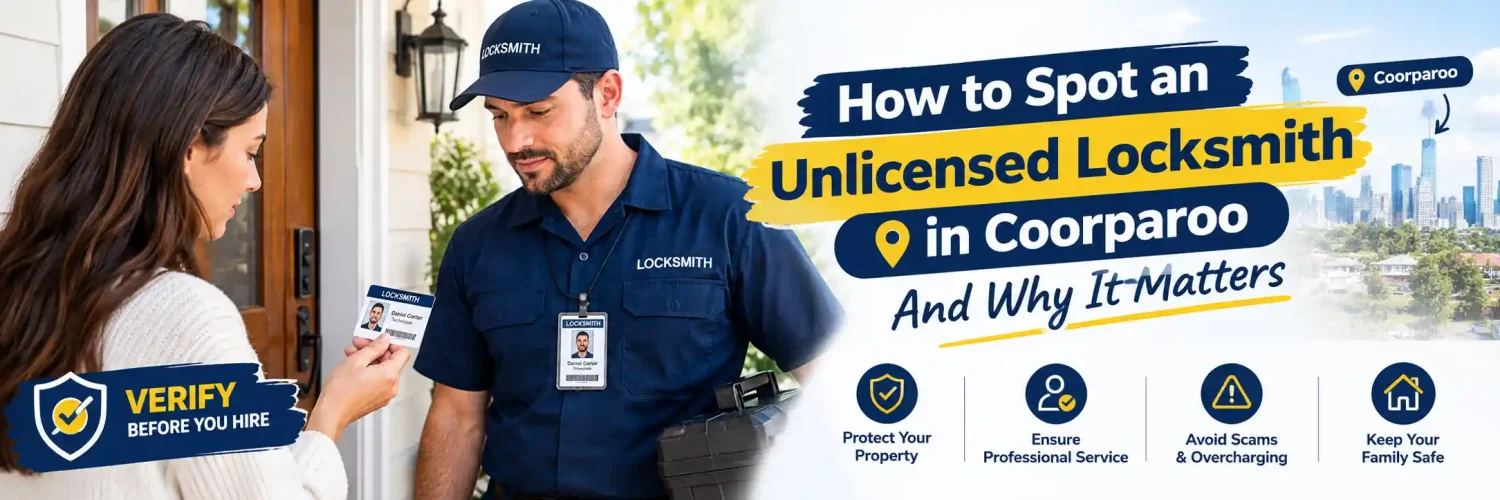
While not every legitimate locksmith wears a branded uniform, most established operators carry some form of identification, whether that is a company issued ID card, a branded vehicle, or at minimum, clear documentation matching the business name you originally contacted. Turning up in an unmarked vehicle with no identifiable connection to the business you called, especially if the name or details do not match what was quoted over the phone, is worth questioning before any work begins.
What to Do Before You Are Ever in an Emergency
The best time to identify a trustworthy locksmith is before you actually need one urgently. Taking a few minutes at some point to research a reputable local locksmith, save their number, and confirm their licensing status means that when an emergency does happen, you are calling someone you have already vetted rather than making a decision under pressure.
If you are searching for a locksmith for the first time during an actual emergency, try to take a moment, even a brief one, to check for a genuine online presence, read a handful of reviews, and ask the direct licensing question before committing.
It feels like an inconvenience in the moment, but it is a small delay compared to the time, cost, and stress involved in dealing with a job done poorly or dishonestly.
What Happens If You End Up With an Unlicensed Operator
If you realise partway through, or after the fact, that you have hired an unlicensed operator, there are a few sensible steps. Document what work was done, including photos if there is any visible damage, and keep any receipts or communication. If the work was clearly substandard or the pricing was dishonest, this documentation matters if you need to dispute charges or report the operator.
For anything involving your home’s security specifically, such as a lock that was drilled unnecessarily or replaced with low quality hardware, it is worth having a licensed locksmith inspect the work afterward to confirm the property is genuinely secure, rather than assuming it is fine simply because the door now locks.
The Role Online Reviews Play, and Their Limits
Online reviews are a useful starting point when evaluating a locksmith, but they should not be relied on entirely, since review manipulation is a known issue across many service industries, locksmithing included. A large number of very recent, very short, generically worded five star reviews, especially if they appeared in a short burst rather than accumulating naturally over time, is worth treating with some skepticism.
More reliable signals tend to come from reviews that mention specific details, such as the type of job completed, roughly how long it took, or a specific staff member by name. A consistent pattern of detailed, varied reviews spanning a longer period of time generally reflects a more genuinely established business than a thin, recently created profile with a suspiciously perfect rating.
How Pricing Patterns Can Reveal Legitimacy
Beyond the specific warning sign of refusing to quote at all, it is worth paying attention to how a locksmith’s pricing is structured more broadly. Legitimate, licensed locksmiths in the Coorparoo and wider Brisbane area tend to fall within a reasonably consistent range for common jobs like a standard lockout or rekey, accounting for some variation based on time of day and complexity.
A quote that is dramatically lower than every other business you have checked can sometimes indicate a bait and switch tactic, where the advertised price is designed purely to win the booking, with additional charges introduced once the locksmith is already on site and the customer has limited leverage to walk away.
This does not mean the cheapest option is automatically suspicious, but a price that seems too good to be true relative to every other quote you have received is worth a second look before committing, particularly if it is paired with any of the other warning signs already covered.
Conclusion
Locksmith work is one of the few trades where the person you hire has direct, intimate access to your home’s security, sometimes literally holding the tools that could compromise it if they wanted to. That is precisely why licensing, transparency, and a small amount of due diligence matter more here than in many other trades.
Taking the time to ask a few direct questions, even under the pressure of a lockout, is not being difficult. It is a reasonable and worthwhile habit for protecting both your property and your peace of mind.